 ×
×
 ×
×
Alberta has already proved agentic AI for individual application delivery. The next challenge is 10× scale: transforming a bounded ministry portfolio of hundreds of applications, thousands of screens, and tens of thousands of APIs and data objects. Alberta's method, recursive SDLC, orchestration, schemas, and evaluator logic remain Alberta's. Cisco can help design, provision, integrate, and observe the supporting environment. Operating responsibility, service levels, and support boundaries must be agreed in the PoV and commercial scope.
Alberta has already proved the method for individual application delivery. The next objective is to scale it across a ministry: hundreds of applications, thousands of screens, and tens of thousands of APIs and data objects, using approximately 12,000 application-garage agents plus thousands of security and accessibility evaluator agents. The engineering target is a tenfold increase from about 3 to 30 billion tokens a day. Separately, Git Insights describes the wider estate through 4,041 application records, 2,182 machine-derived capabilities, 40 domain clusters, and 24,083 many-to-many links. Target AI workload: unclassified code and schemas; no personal information is processed by the target AI.
Alberta owns the method: the application and content engine, Git Insights, modular application architecture, recursive SDLC, orchestration logic, schemas, application garage, and evaluator methods. Cisco does not claim to invent or supply them. Cisco can help design, provision, integrate, and observe the supporting environment through capacity planning, scalable inference infrastructure, orchestration integration, observability, and target-architecture lifecycle work. Operating responsibility, service levels, and support boundaries must be agreed in the PoV and commercial scope.
This document registers areas where Cisco can credibly support that scale-out: capacity planning for the 12,000 application-garage agents plus thousands of evaluator agents; GPU, model, network, storage, and Kubernetes or OpenShift scale-out architecture; lifecycle and deployment services; and optional component scanning, runtime guardrails, workload protection, agent identity, and observability. Antares appears only as a narrow vulnerability-localization component. These are Cisco capabilities to evaluate and proof-of-value hypotheses to test, not guarantees.
The practical starting point is one bounded application family. Define success, provision an isolated environment, connect Alberta's harness and orchestrator, run the recursive loop at increasing concurrency, and measure quality, repeatability, latency, cost, evaluator efficacy, operator burden, and scale-out. Local or controlled compute is justified by scale, operational control, economics, resilience, policy, and model choice, not by personal or health data.
Alberta owns the content engine, the Git Insights Ministry-derived methods, the recursive build/test/evaluate/remediate/regenerate loop, the SDLC, the schemas, the application garage, agent orchestration, and the security and accessibility evaluator logic. These are not for Cisco to supply.
Cisco can support designing, provisioning, integrating, and observing scalable inference infrastructure, capacity and scale-out architecture (concurrency, model mix, tokens, latency, GPU utilization, network, storage, failure domains, scale-out stages), lifecycle and deployment services, observability, integration support for the orchestrator Alberta owns, and optional selected controls. Cisco does not own the orchestrator or the modular application architecture.
Specification → retrieve context → isolated generation → test → expert evaluation → audit → remediate or regenerate → human approval → deploy → observe and feed back. Retrieval uses vector search, RAG, and connectors to bring the right policy, code, schema, and prior decisions into the task. Expert security and accessibility models evaluate the result. The harness and Alberta-owned orchestration turn the sequence, including recursion and loops, into repeatable responses and transparent, auditable outcomes.
A starting pathway others can follow: choose a bounded application family; agree success criteria; provision the target environment; connect Alberta's harness; run the loops at increasing concurrency; then measure quality, repeatability, latency, cost, evaluator efficacy, operator burden, and scale-out. This is a proof of value for scaling the method, not a reinvention of it. Operating responsibility, service levels, and support boundaries remain to be agreed.
Alberta pointed AI at the government's entire code estate and turned it into Git Insights: a de-identified, shareable snapshot of the whole software corpus, with twelve interactive views for exploring it. This is Alberta's own work and evidence. It is background for the session, not a problem for Cisco to solve.
What is in the snapshot. One scan, 16 to 18 July 2026, of 4,041 applications, sorted into 2,182 machine-derived capabilities across 40 domains, with 24,083 links between capabilities and applications, over 50 technologies.
How much to trust it. Every label is machine-derived, and the tool is honest about it. Capabilities, domains, and ministry groupings are AI abstractions. Security risk, cost, and age are estimated and shown in bands, not exact numbers. A system's recommended disposition (keep, fix, retire, or rebuild) is a suggestion, not an approved decision. Read it as a rich starting point, not a final answer.
Why it matters here. Knowing the estate this well is portfolio intelligence: it tells you what exists and where to begin. That is a different job from the transformation itself, rebuilding hundreds of applications, thousands of screens, and tens of thousands of APIs. That build work is what has to scale from about 3 to 30 billion tokens a day. Alberta owns the method; Cisco helps design, provision, integrate, and observe the environment it runs in.
| # | View | What it shows |
|---|---|---|
| 01 | Command dashboard | The whole estate on one screen. Live counts (4,041 apps, 2,182 capabilities, 40 domains, 667 in the top risk band), filters by ministry, risk, disposition, and language, and a drill from the summary all the way down to a single de-identified record. |
| 02 | Capability treemap | What the estate actually does, sized by how many apps deliver each capability. Five ways to group it and a zoom from domain to capability to application. The biggest are DevOps CI/CD (1,169 apps) and App Configuration (1,003). |
| 03 | Knowledge graph (2D) | The estate as a network: 40 domains and 2,182 capabilities with their shared connections. Recolour by technology, risk, age, or ministry, and open a capability to the apps beneath it. Layout shows what is connected, not what things mean. |
| 04 | Estate matrix (3D) | The top 18 domains against seven technology families, as towers split by risk. Orbit, zoom, and isolate. Needs a simple fallback view on locked-down machines with no 3D graphics. |
| 05 | Capability tiles | Every one of the 2,182 capabilities as a tile, coloured by app count, risk, or redundancy (20 or more apps doing the same thing). The typical capability is delivered by two apps. |
| 06 | Capability sunburst | The 40 domains and 2,182 capabilities grouped into six service areas, sized by number of links. The largest is Software Delivery and Engineering, at 20 percent of the estate. |
| 07 | Portfolio flow | A flow diagram from ministry to technology family to disposition or risk. It shows app counts, not approved ownership or decisions. |
| 08 | Risk and cost landscape | Every app placed on a risk-versus-rebuild-cost grid, plus an age-versus-risk scatter. Banded and de-identified: no vulnerability names, hosts, file paths, or source code. |
| 09 | Executive briefing | A four-page, print-ready report: estate summary, capabilities, technology and age health, and recommended disposition with the method behind it. A read-only briefing, no filters. |
| 10 | Linked data explorer | Follow the joins by hand: capability to record to capabilities. Search a record and see its technology, scale, age, integrations, security bands, and costs. The clearest picture of how the pieces link together. |
| 11 | Knowledge graph (3D) | The same network in three dimensions, expandable a capability at a time. Also needs a non-3D fallback so it never renders blank. |
| 12 | Ministry portfolio view | Profiles each ministry portfolio by risk, technology, disposition, and capability, and flags where portfolios overlap. A starting point for a consolidation conversation; ownership still has to be confirmed internally. |
Today Git Insights is a solid first-generation atlas: one de-identified data pack, a shared loader that cleans and indexes it, stable IDs that join records together, and many views drawn from a single underlying model. It is a strong prototype. It is not yet the modular engine that would run at full government scale.
Reaching that scale means turning today's prototype into reusable, versioned parts: canonical schemas and stable IDs, a shared query engine that can move to a backend as the data grows, reusable view components, progressive loading for very large datasets, provenance and caveats carried through to every output, and plain fallbacks so nothing breaks on a locked-down machine. Alberta owns that engine and its architecture, along with the method, the schemas, and the evaluators. Cisco supports the capacity underneath it: scalable inference, networking and storage, observability, provisioning, and selected controls.
Source: Alberta's Git Insights data pack and the briefing "The shape of Alberta's software estate," for the Velocity Symposium, 28 July 2026 (govalta.github.io/VELOCITY-GIT-INSIGHTS). The pack is de-identified to a k=5 privacy target. Some records in the wider scanned corpus involve personal information, but the AI workload in scope here touches only unclassified code and schemas, and never personal information. The 3-to-30-billion-token target, the 12,000-agent engine, and the target architecture are Alberta's own stated goals.
Everything below comes from the published papers. Where a requirement is implicit, the register says so. Each requirement appears in exactly one domain, and the five domains cover the full set: where agents run, what they may do, who they are, how they are watched, and how the estate is operated and the partnership run.
| ID | Requirement | Source | Domain |
|---|---|---|---|
| R1 | Controlled compute for the target AI workload, chosen for scale, economics, and operational control; target AI workload: unclassified code and schemas; no personal information is processed by the target AI | №12 §03 | A · Compute |
| R2 | Token throughput past the 25–50M/minute ceilings, diversified and load-balanced | №12 §06 | A · Compute |
| R3 | A supported platform for the Ministry's own hardware and data-centre capacity (OpenShift under evaluation) | №12 §02 | A · Compute |
| R4 | Audit of the agent supply chain: skill files, MCP tools, and open-source components before use | №12 §05 · №07 | B · Security |
| R5 | Defense beyond the model's own 95–98% injection resistance | №12 §04 | B · Security |
| R6 | Governance for self-directed claw agents (OpenClaw / Hermes), 6–12 months out | №09 §06 | B · Security |
| R7 | Cyber response at the attacker's new speed: exploits weaponized in hours, supply chain the primary target | №02 | B · Security |
| R8 | Agentic identity management: agents act in their own name, task-based and time-boxed | №12 §05 · №09 §03 | C · Identity |
| R9 | Observing agent activity across the network, with oversight at the level of the system | №12 §05 · №15 | D · Observability |
| R10 | Operating the rebuilt estate: every agent action observable and accountable to a named person | №05 §05 (implicit) | E · Operations |
| R11 | A partner model: strong companies tested against government workloads, through the Sovereign Compute process and RFPs | №12 §05 | E · Operations |
Paper numbers follow the homepage index at thevelocitywhitepapers.com. The papers are MIT-licensed; quotations and paraphrases are cited in place. Paper 12 ("The Agentic Technology Stack") is №12 on its own page, in the homepage index, and in its metadata (sequence 12 of 21) ; but the paper's own auto-generated summary slide deck and figure numbers (FIG. 11.1, FIG. 11.2) still carry an earlier "11," left over from before it was renumbered. This document uses that number throughout.
Alberta has already built and proved the application method. The primary Cisco-relevant support areas are the supporting environment beneath it: scalable inference, integration with Alberta's orchestrator, observability across the recursive loops, and provisioning and lifecycle for the target architecture. Identity and security controls remain supporting layers. The question is how to connect supported infrastructure without replacing Alberta's harness, recursive SDLC, evaluator methods, or orchestration logic.
This is Alberta's agent pipeline as papers 09 and 12 describe it: a Builder delegates to agents, agents mount skills and MCP tools from the harness, prompts route through Bifrost to models, tool calls route through Ent Tools, and finished work lands in the estate. In the baseline view, the red markers are six control areas selected for a proof of value, sitting where they occur in the flow, and the red dot models a hypothetical poisoned component travelling toward production. Switch to the second view: the pipeline is identical, a Cisco control overlay appears inline at those same points, every area flips to green, and the scanner raises a finding whose policy outcome must be tested. Nothing about how Alberta works changes. Green means a Cisco capability is overlaid for testing, subject to a proof of value, not a guaranteed outcome.
The register runs eleven requirements and the answers run to a dozen product names, so here is the whole Cisco side reduced to five things, each holding one domain. Everything after this section is detail on these five.
| Name | What it is | Holds |
|---|---|---|
| Secure AI Factory with NVIDIA | The plant floor: validated designs combining compute, AI networking, and partner storage, starting at a single GPU and scaling to sovereign-cloud size, in Alberta's own facilities or anyone's | Domain A |
| AI Defense | The trust plane for models and agents: validate a model, generate its guardrails, enforce them inline, scan everything an agent mounts. Its scanner family is open source | Domain B |
| Duo Agentic Identity | Identity for a workforce that is not human: discovery, lifecycle, least-privilege access sized to the task | Domain C |
| Splunk | Can provide workflow traces, evaluations, token, cost, and performance data where instrumentation exists. Correlation, automation, evaluator ingestion, and containment require integration validation | Domain D |
| Cloud Control | Manages supported Cisco infrastructure. Potential integration is an architecture hypothesis; Studio pricing, release status, licensing, and required configuration must be confirmed | Domain E |
One survey number frames why this matters now. In Cisco's January 2026 survey of security and IT executives, 55 percent had agentic AI in pilot or production, 59 percent named security as the biggest barrier, and 4 percent were confident about full-scale deployment. Alberta is already past the 55 percent. The register is the path into the 4 percent.
This domain is about scalable inference and target-architecture provisioning, engineering questions squarely suited to Cisco support. The target is a tenfold climb, from about 3 to 30 billion tokens a day, feeding approximately 12,000 application-garage agents plus thousands of security and accessibility evaluators across hundreds of applications, thousands of screens, and tens of thousands of APIs and data objects. Alberta owns the recursive loop and orchestrator; Cisco helps integrate with that orchestrator and plan the capacity beneath it: concurrency, expert-model range, tokens, latency, GPU utilization, network and storage, virtual environments, failure domains, observability, provisioning, and scale-out stages that avoid a forklift rebuild. Paper 12 adds context: the enterprise token ceilings of 25 to 50 million tokens per minute will likely be exceeded soon, controlled compute is being pursued for scale and operational control, and Red Hat OpenShift is under evaluation for the Ministry's own hardware. Target AI workload: unclassified code and schemas; no personal information is processed by the target AI. controlled compute here is justified by scale, economics, resilience, policy, and model choice, not by any personal or health data. Cisco's contribution is the Secure AI Factory with NVIDIA: the same reference design at any scale.
Detailed sizing, throughput, GPU, user, power, cost, and deployment-time figures in this section are illustrative engineering estimates from Cisco internal technical documentation, not sizing or delivery commitments. Results depend on model, precision, context, batching, concurrency, software release, workload mix, infrastructure, and site conditions. Availability, licensing, release status, regional availability, required subscriptions, and configuration must be confirmed before procurement scope.
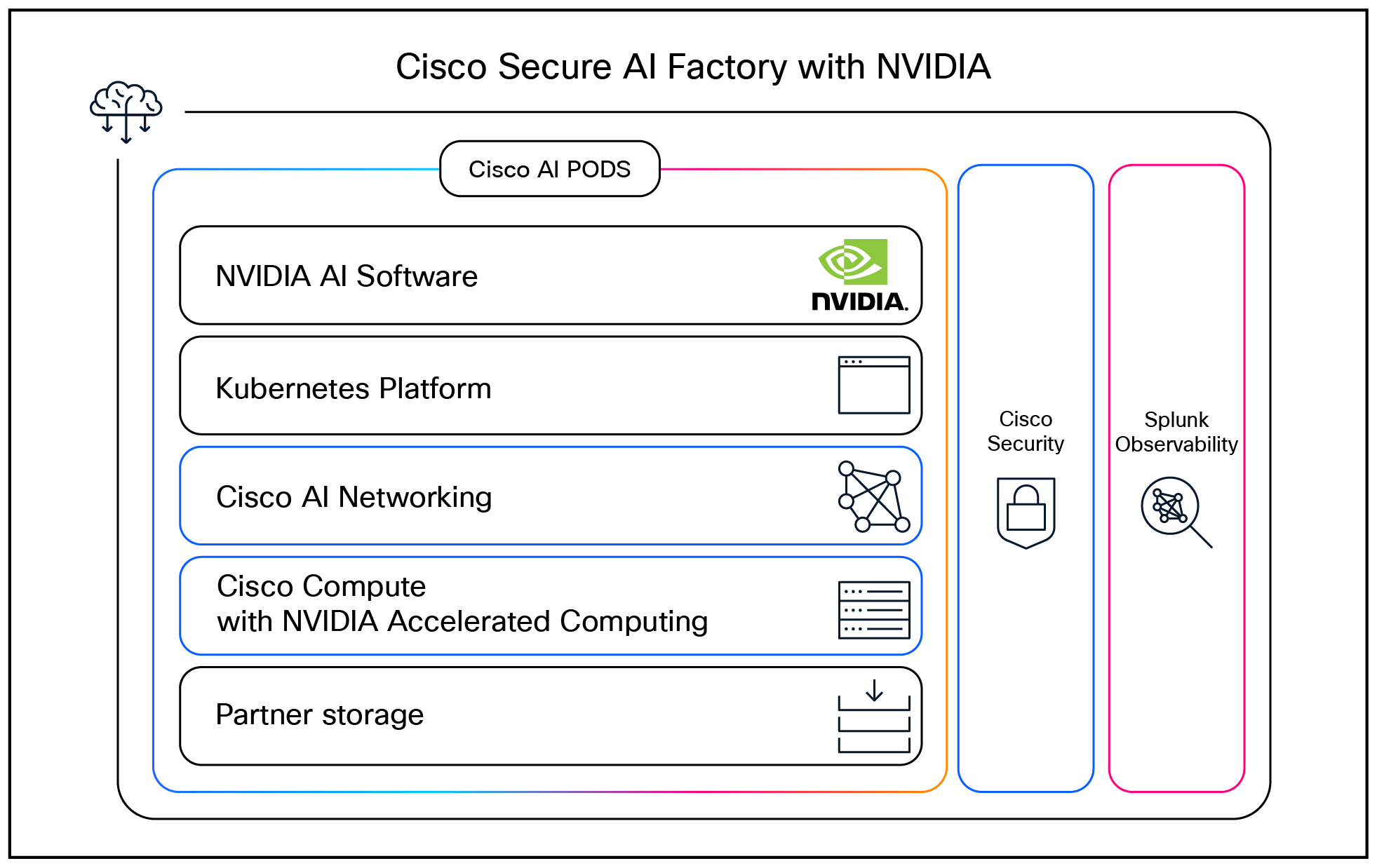
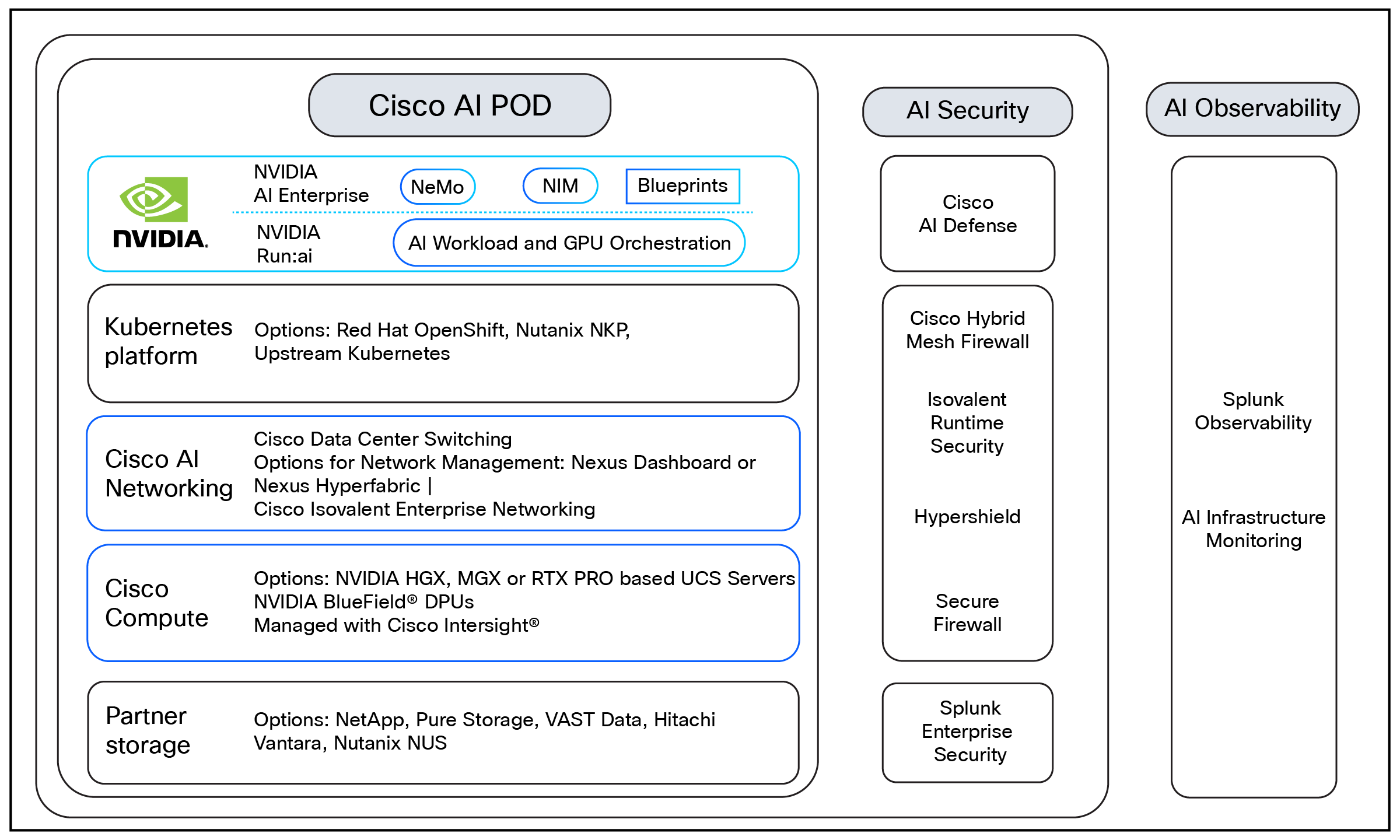
Cisco Services runs the deployment on two named metrics. Time to first intelligence (TTFI) covers plan, design, implement, validate, knowledge transfer, optimize, and scale-out, with up to a 75 percent reduction in deployment time, three to four weeks in practice. Cost to true scale (CTTS) makes the expansion curve predictable. The reference cases: a 1,000+ GPU cluster validated in under a week, and a global travel platform that hit cost break-even after ten training runs.
The 1,000+ GPU and travel-platform examples are illustrative internal reference cases, not delivery, sizing, cost, or performance commitments. Results depend on model, precision, context, batching, concurrency, software release, workload mix, infrastructure, and site conditions; see also §10.
| Architecture | Scale | Switching silicon | Status |
|---|---|---|---|
| Cisco ERA NVIDIA Enterprise RA compliant | Under 1,024 GPUs; enterprises | Cisco Silicon One (N9300), Spectrum-X license optional | Candidate configuration; availability, licensing, release, region, subscriptions, and configuration to confirm |
| Cisco CRA NVIDIA Cloud Partner RA compliant | ~1,000 to 32,000 GPUs; neoclouds and sovereign clouds | Cisco Silicon One + Spectrum-X, or N9100 with NVIDIA Spectrum silicon | Candidate configuration; availability, licensing, release, region, subscriptions, and configuration to confirm |
Cisco internal technical documentation names sovereign clouds as a segment the CRA is built for. Alberta would enter at ERA scale with a CRA-compatible design, so the ceiling is 32,000 GPUs away.
Alberta can start at a single GPU and scale up from there, sized against models Alberta already tests. Pick the GPU; figures below are tokens per second and concurrent users for a validated 32-GPU reference unit, the standard building block once a deployment scales past a single card.
| Model | Standard precision | Reduced precision (FP4) |
|---|
Illustrative engineering estimates from Cisco internal technical documentation, not sizing commitments. Results depend on model, precision, context, batching, concurrency, software release, workload mix, and implementation. Public benchmarks: mlcommons.org.
| Form factor | GPUs supported | Built for |
|---|---|---|
| Dense HGX servers | B300 NVL8, H200, H100 | Model training, heavy inference; data-centre core |
| MGX servers | RTX Pro 6000/4500, H200, H100, L40S | Optimization and inference |
| Modular and rack servers | RTX Pro 6000/4500, H200, H100, A16, L40S, L4 | Mixed enterprise workloads |
| Cisco Unified Edge | RTX Pro 6000/4500, L40S, L4 | Inference at regional sites, no data-centre latency |
Intersight is a candidate management layer for supported configurations. Support boundaries and contracts must be agreed in commercial scope. The network underneath can provide and the network underneath carries outcomes Cisco documents by name: AI fabric templates and congestion scoring in Nexus Dashboard, intelligent packet flow with advanced load balancing, and lossless RoCEv2 from 10G to 800G. Ministry sites outside Edmonton get the same architecture at edge scale, which is how 27 ministries stay one estate.
Compute-range specifications and the Nexus Dashboard feature list are drawn from Cisco internal technical documentation.
Paper 12 puts the number on the problem: the best models resist prompt injection 95 to 98 percent of the time, and no model is immune. Paper 07 adds that skill files are software and can carry an attack. Paper 02 reports exploits weaponized in hours. Nexus already re-delegates agent access every few hours so that no grant is permanent. This domain covers the remaining distance: inline enforcement on every prompt and response, scanning of the components agents mount, and governance ready before the claws arrive.
None of this is provable from a slide. Before Alberta commits to R4 through R7 at scale, Domain B proposes a proof of value that needs nothing invented: take the same six control areas FIG. 2b already marks as a baseline, and run the matching Cisco capability against each one, so every row of the table below produces its own measured number instead of a vendor claim. Paper 09's claw-based orchestration expansion, where white-hat claws already simulate real attackers against real self-directed agents, is one candidate rollout to carry the test. The actual use case and the timeline are both still to be determined.
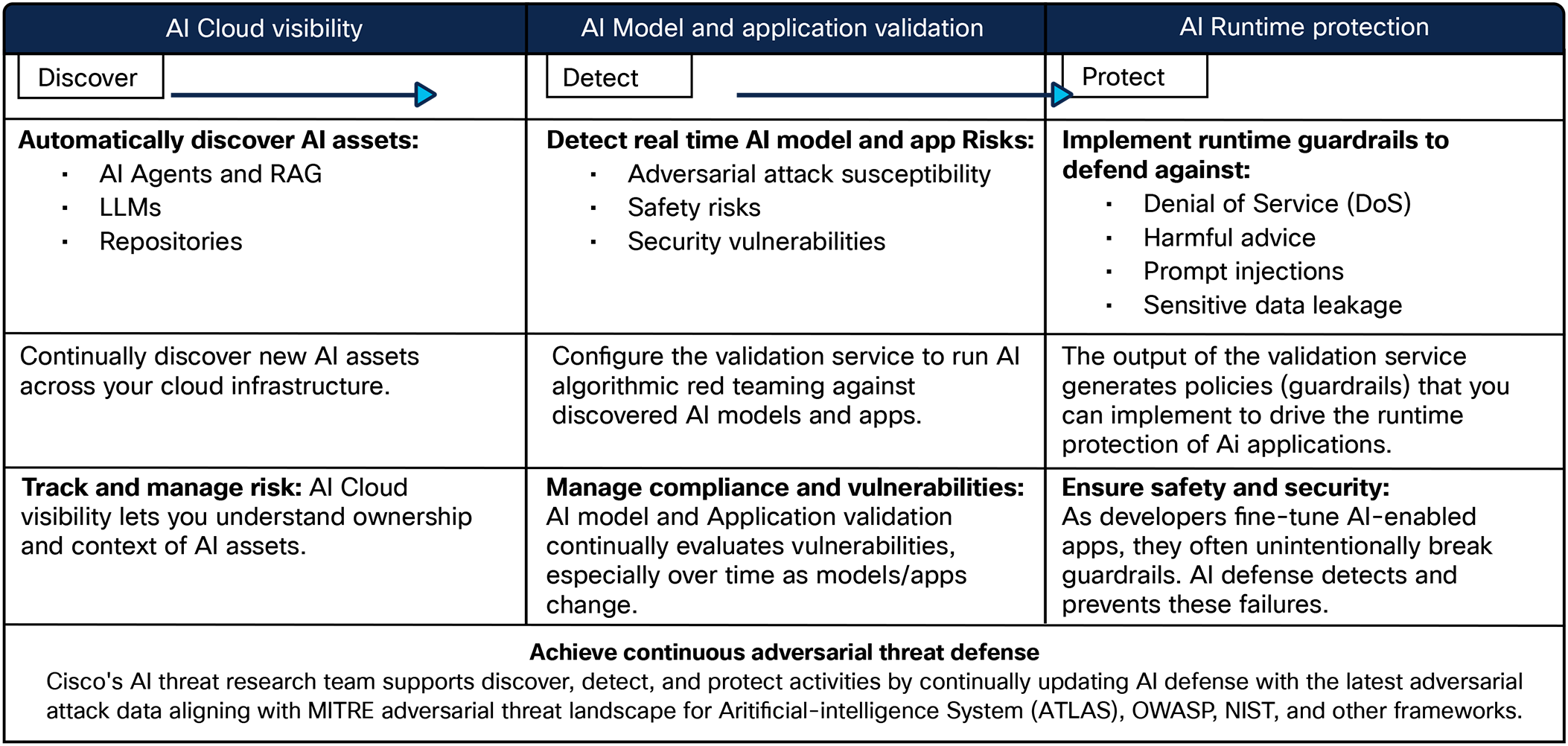
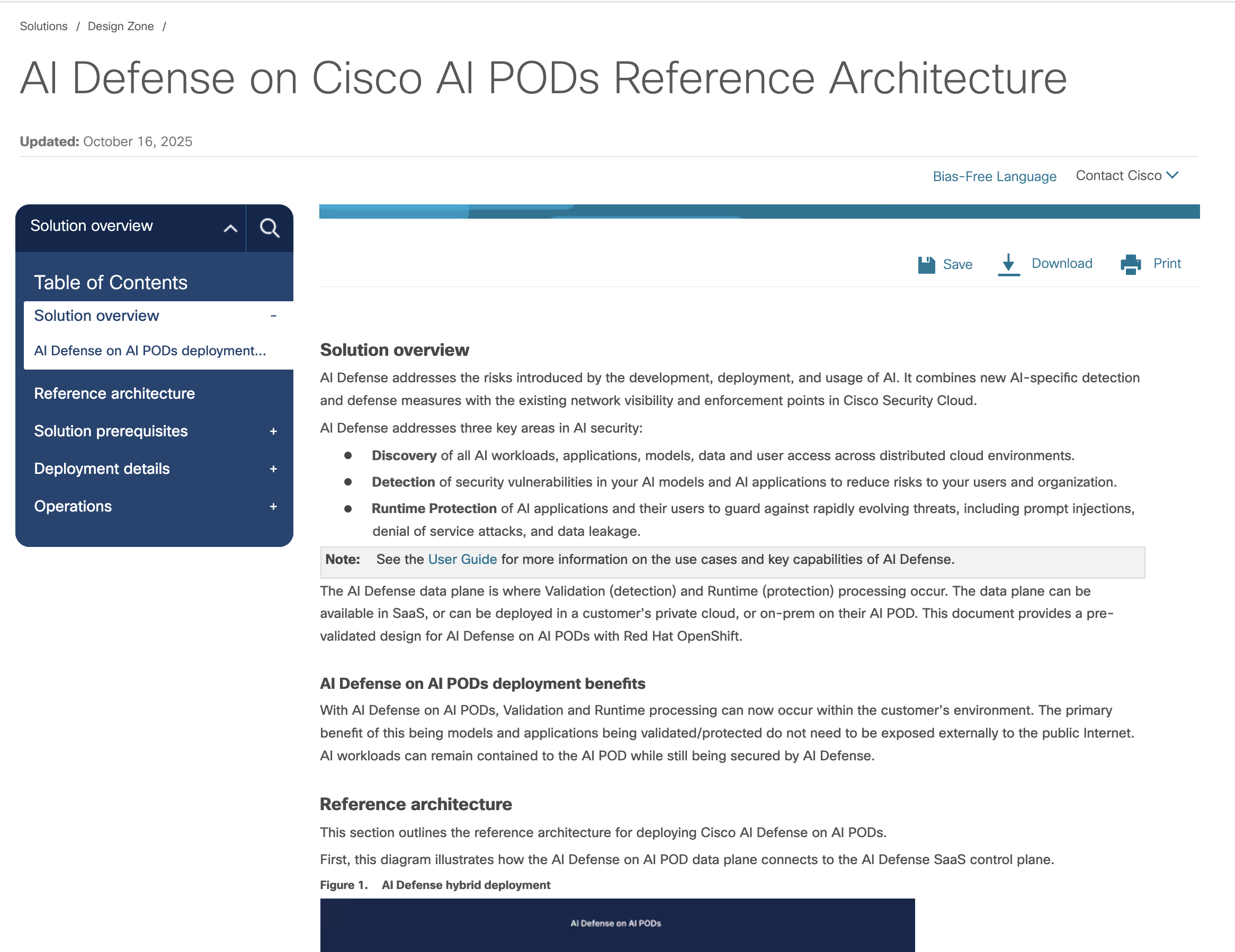
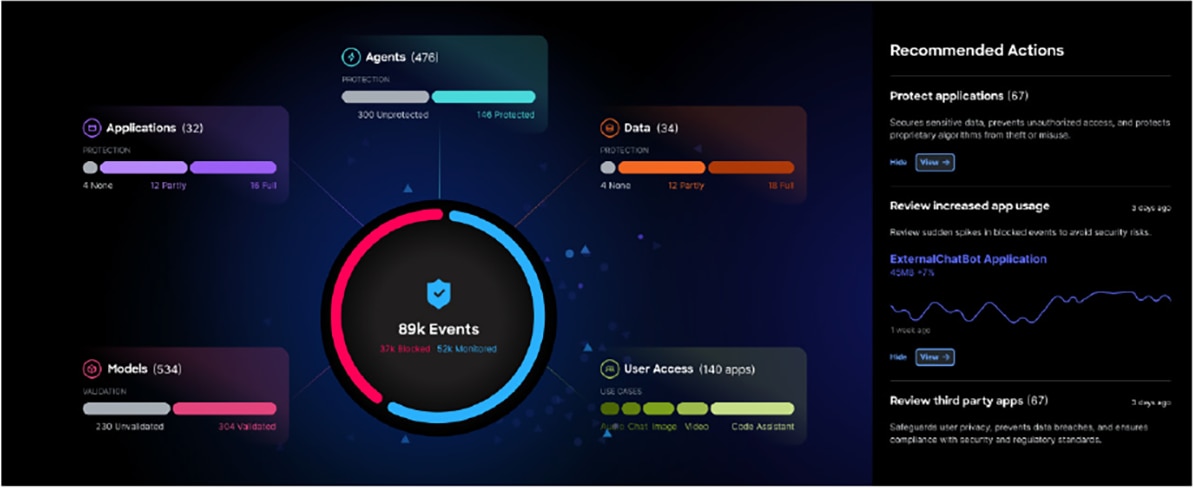
These examples illustrate the published set of 200+ attack techniques and threat categories.
Validation produces reports mapped to OWASP, NIST, and MITRE, then generates guardrails aimed at the specific weaknesses it found in the specific model under test. The guardrails run bi-directionally at runtime, and the same policy applies whether the model is hosted elsewhere or running on Alberta's own GPUs, because enforcement is hybrid: control and management stay in Security Cloud Control while runtime traffic never leaves the premises. Where NVIDIA NeMo Guardrails already run, AI Defense supplies the input and output rails through API disposition and shares one policy across both. One boundary belongs in the proof of value rather than in prose: runtime payloads stay on premises, while policies, events, and reports flow to the Security Cloud Control plane, and whether that management envelope meets Protected B handling, and what a fully offline Protected C posture looks like, are questions the PoV answers with evidence.
Integration details with NVIDIA NeMo Guardrails and Security Cloud Control are drawn from Cisco internal technical documentation.
Validation is only credible if the results are published, so they are. The AI Defense leaderboard ranks frontier and open models against the same red-teaming suite this document proposes running against Alberta's fleet. The models in Alberta's stack are on it.
leaderboard.aidefense.cisco.com The AI Defense model security leaderboard → Frontier and open models, ranked against the same validation suite this document proposes. Opens in a new view; the site does not permit embedding, which is the right default for a security product.| AI Defense POD | Hardware | GPUs | Sustains |
|---|---|---|---|
| Small | 2 × UCS C845A | 4 × L40S each | 100 req/s · 20 applications |
| Medium | 2 × UCS C845A | 8 × L40S each | 200 req/s · 40 applications |
| Large | 3 × UCS C845A | 8 × L40S each | 300 req/s · 60 applications |
Illustrative engineering estimates, not sizing commitments. Actual results depend on model, precision, context, batching, concurrency, software release, workload mix, and configuration. Source: Cisco internal technical documentation and the Design Zone reference architecture.
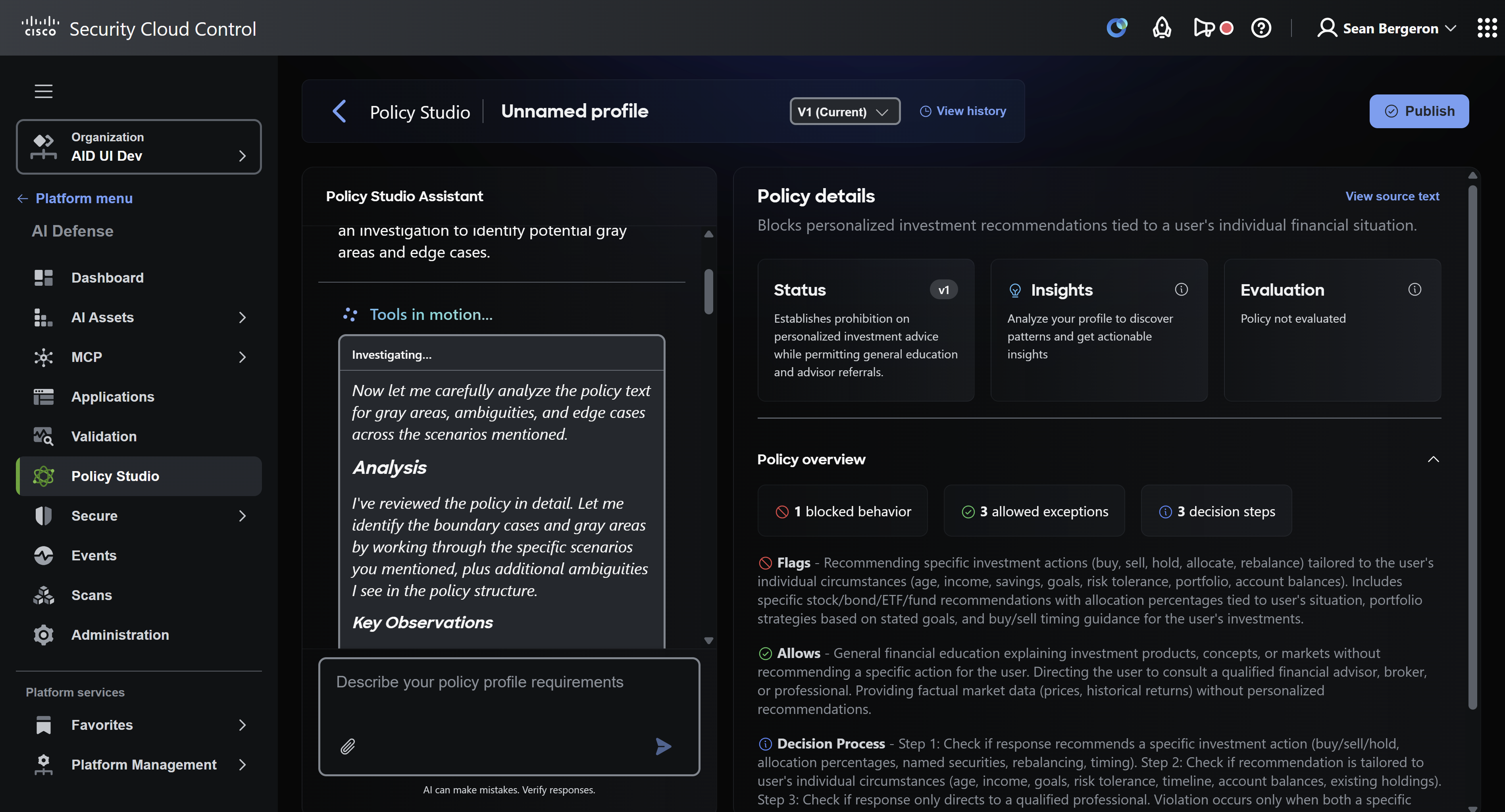
Paper 05 rests Government 3.0 on one premise: business rules written once, drawn straight from legislation and policy, so that when the law changes, every interaction follows the new rule the same day. Policy Studio is that premise applied to guardrails. A policy owner, a compliance officer rather than an engineer, works through a chat-and-review session: the assistant drafts a human-readable policy document, tests it against real conversations, and surfaces the judgment calls as questions. Textual insights flag gaps in the draft ("does hypothetical phrasing count as advice?"); behavioural insights show patterns from production data, thirty-one cases at a time, answerable with one decision. Ten distinct judgments cost about ten answers, whether the corpus is seventy conversations or seventy thousand.
The result is one artifact doing three jobs: compliance reads it, auditors read it, and the runtime classifier reads it to decide every request. The forthcoming research behind it shows a reasonably sized open-source model interprets such a policy almost as accurately as a frontier model, so the rule Alberta's policy owner writes can run on Alberta's own hardware, no hosted API in the loop. For a government whose regulatory content is already codified law, this is the shortest path from statute to enforcement anyone has shipped. It is also a working answer to the genie problem: the constitutions behind it run three hundred lines per technique, precise enough that different frontier models return the same decision on the same input, which is what taking the latitude out of language looks like in practice.
Paper 09's sandbox is Nexus policy; Isovalent enforces the same intent one layer down, in the kernel, where an agent cannot argue with it. Each example below is a working policy from the Cisco reference materials. This is what "the floor is load-bearing" means in practice, and it is the enforcement layer waiting for the claw phase.
kind: CiliumNetworkPolicy
metadata: { name: "agent-rule" }
spec:
  endpointSelector: { matchLabels: { role: agent } }
  ingress:
  - fromEndpoints:
- matchLabels: { role: frontend } # allow, everything else dropsegress:
- toFQDNs:
- matchName: "*.aidefense.security.cisco.com"
toPorts: [ { ports: [ { port: "443", protocol: TCP } ] } ]kind: SandboxPolicyNamespaced
spec:
syscalls:
- list: [ sys_ptrace, sys_execve, sys_chmod, sys_chown ]
actions: [ Post, Block ] # log it, then refuse itkind: TracingPolicy spec: file_paths: [ "/models/llama.safetensors" ] matchOperations: [ FILE_WRITE, FILE_DELETE ]
Alberta published its work under MIT and asked industry to answer in kind. Every scanner and governance tool named in this domain is public, and adopting any of them requires nothing from Cisco.
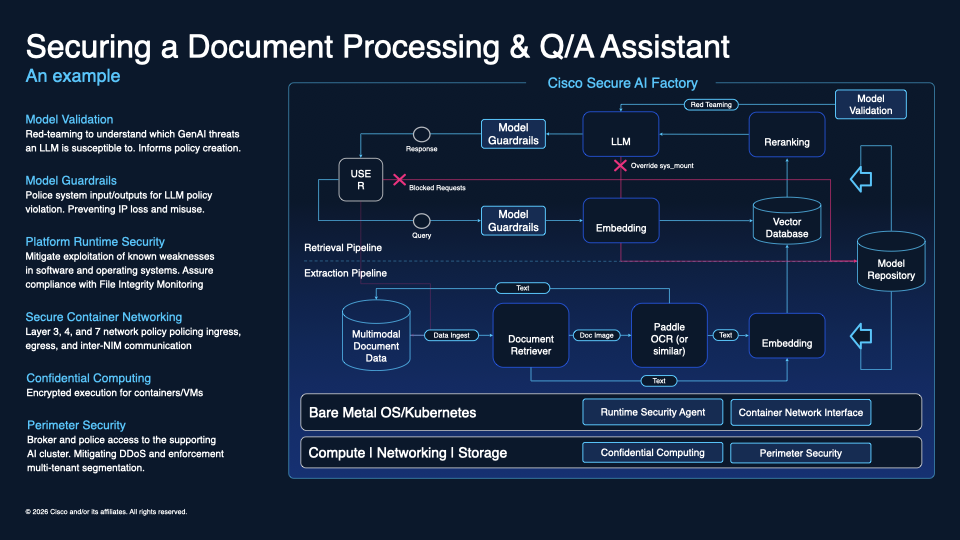
OCR extraction, embedding, a vector database, retrieval, and an LLM, each stage carrying its control. Validation red-teams the model and informs the policy; guardrails police query and response; the runtime agent blocks a sys_mount from inside the embedding pod; the container network polices inter-service traffic at layer 7; confidential computing encrypts execution; the perimeter brokers access. Swap the sample documents for paper 12's fourteen million historical records and this is the 250-agent job, secured end to end with parts that exist.
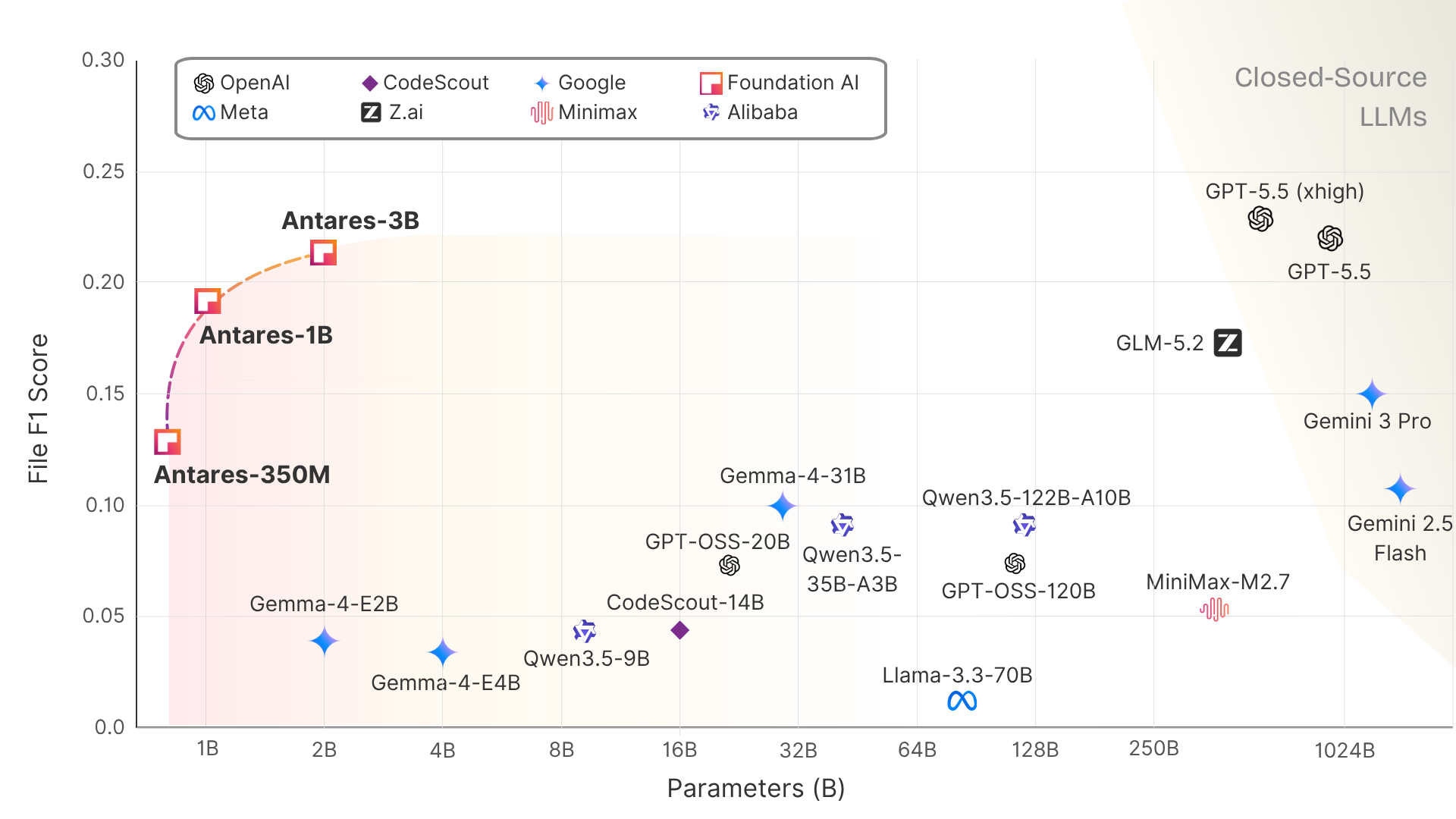
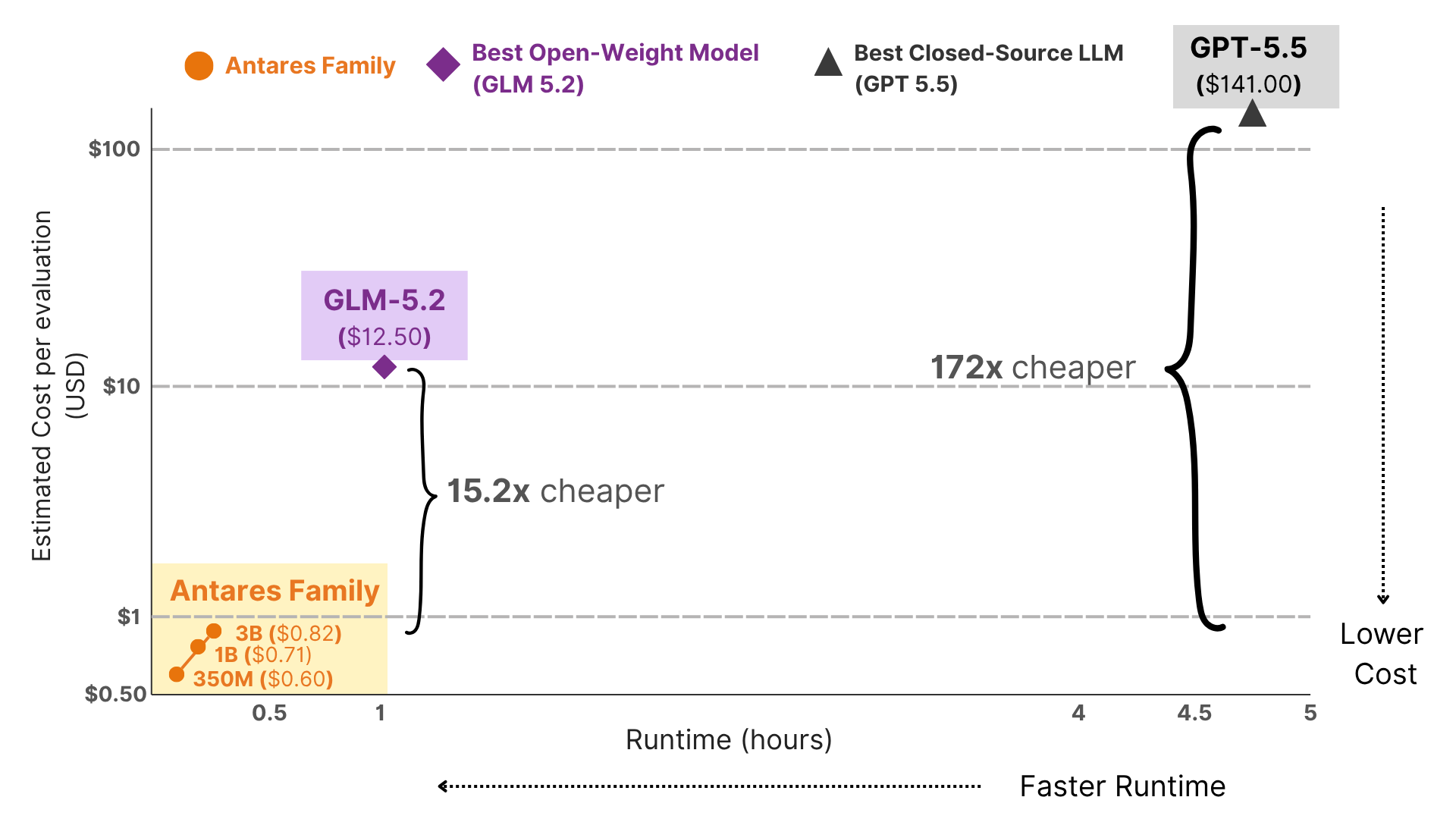
Cisco Foundation AI has released the open-weight Antares-350M and Antares-1B models on Hugging Face; Antares-3B is coming soon. On Cisco's 500-task Vulnerability Localization Benchmark and among the released models, Antares does a job neither scanner does today: given a known vulnerability, it works iteratively through a codebase like an investigator, reading files and backtracking on evidence, to rank which files actually contain it. That closes the gap between rule-heavy static analysis and general coding models not tuned for security triage, sitting upstream of what the Skill Scanner and MCP Scanner already cover. On Cisco's 500-task Vulnerability Localization Benchmark, Cisco's chart estimates about $0.82 for the compared released Antares run versus $141 for the plotted GPT-5.5 run, approximately 172× lower. This is a benchmark estimate, not a production guarantee. That locality matters for R1 and R4 both: nothing about a scan needs to leave Alberta's own facilities.
Nexus re-delegates access every few hours. Duo Agentic Identity is a candidate identity control to test for discovery, human ownership, scoped authorization, lifecycle, and audit. Integration with Alberta's delegation model, direct mapping to Nexus, availability, licensing, regional availability, required subscriptions and configuration, and orderability must be validated before procurement scope.
Duo Agentic Identity builds on Astrix Security's non-human identity discovery technology; Cisco completed the acquisition in June 2026.
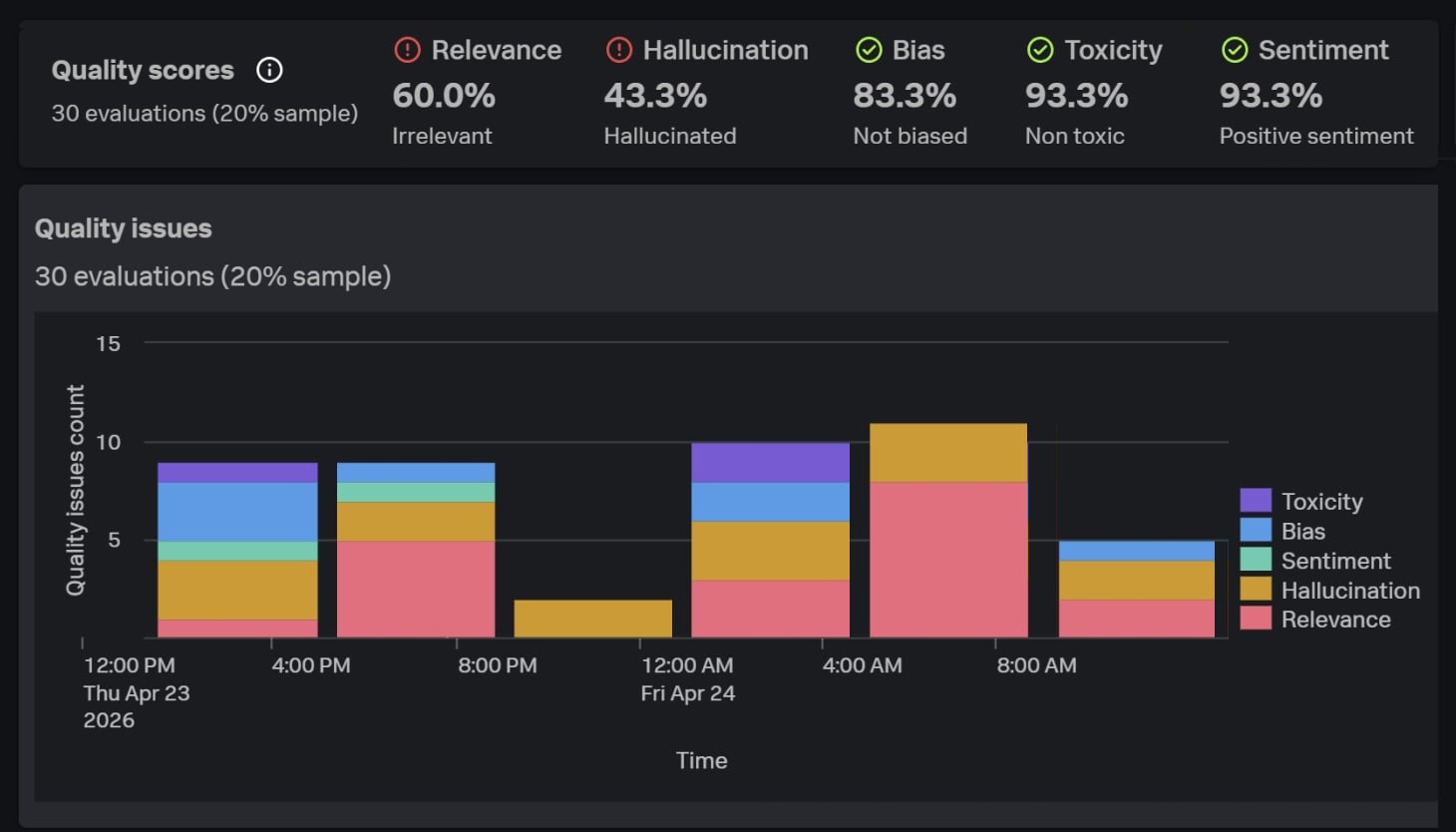
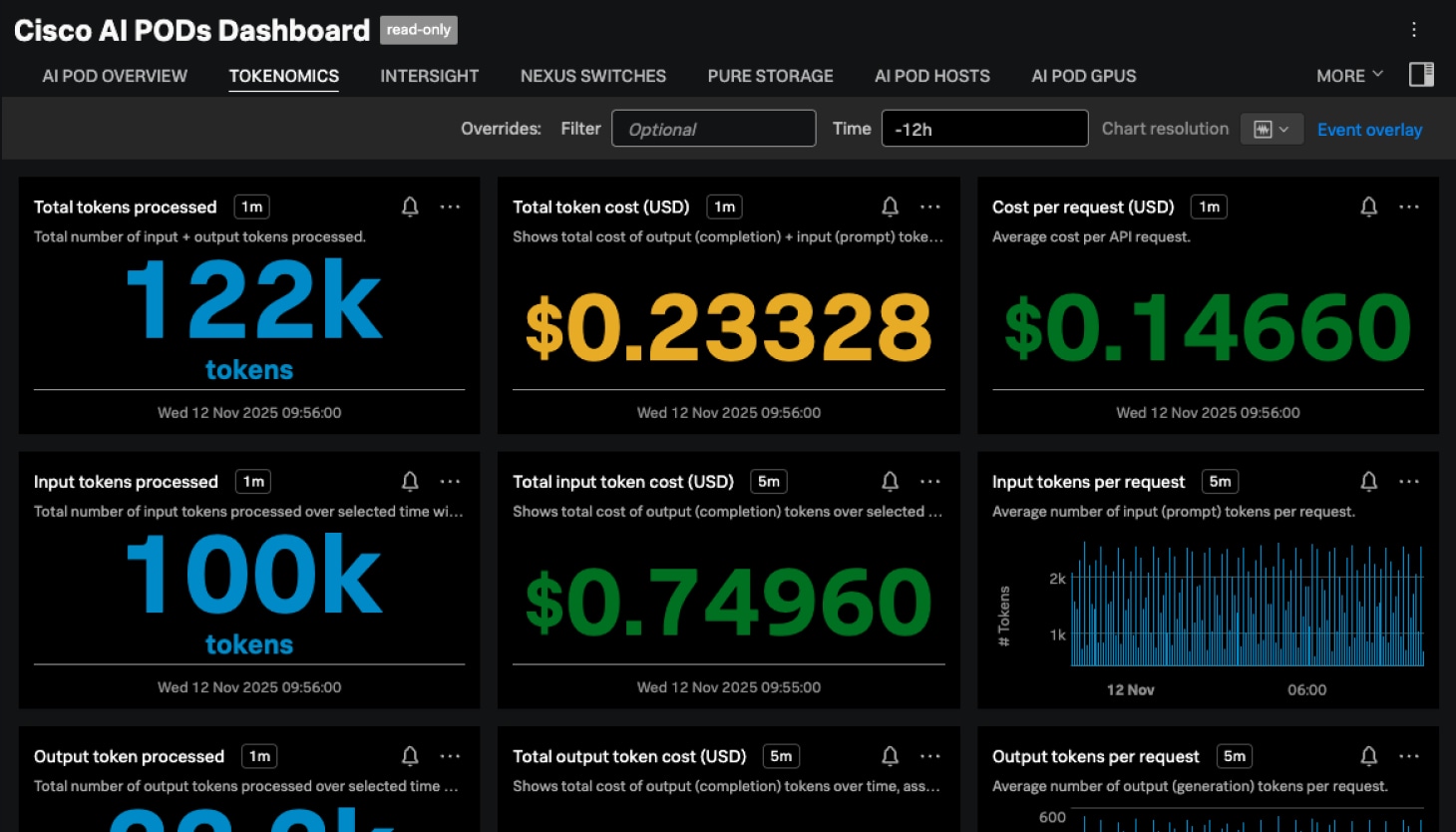
Paper 15 argues that oversight must move from individual agents to the system level. Splunk can provide workflow traces, evaluations, token, cost, and performance data where instrumentation exists. Cross-product correlation, automation, evaluator ingestion, and containment require integration validation. Agent Observability does not replace Alberta's evaluator logic or provide containment by itself.
The Splunk Enterprise Security + AI Defense add-on integration and the containment-playbook capability are drawn from Cisco internal technical documentation; the evaluators, tokenomics, and guardrail features below are documented publicly by Splunk.
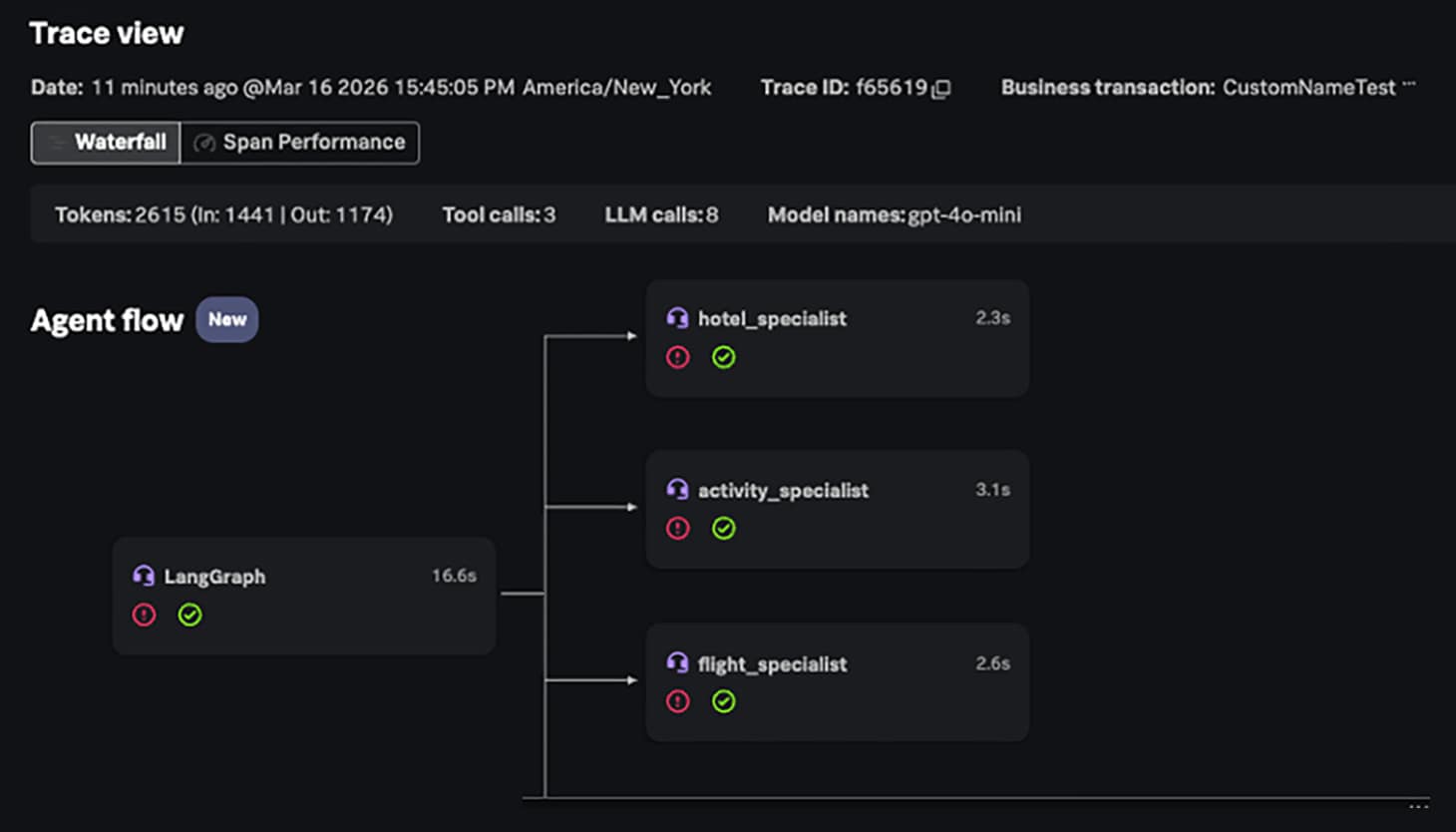
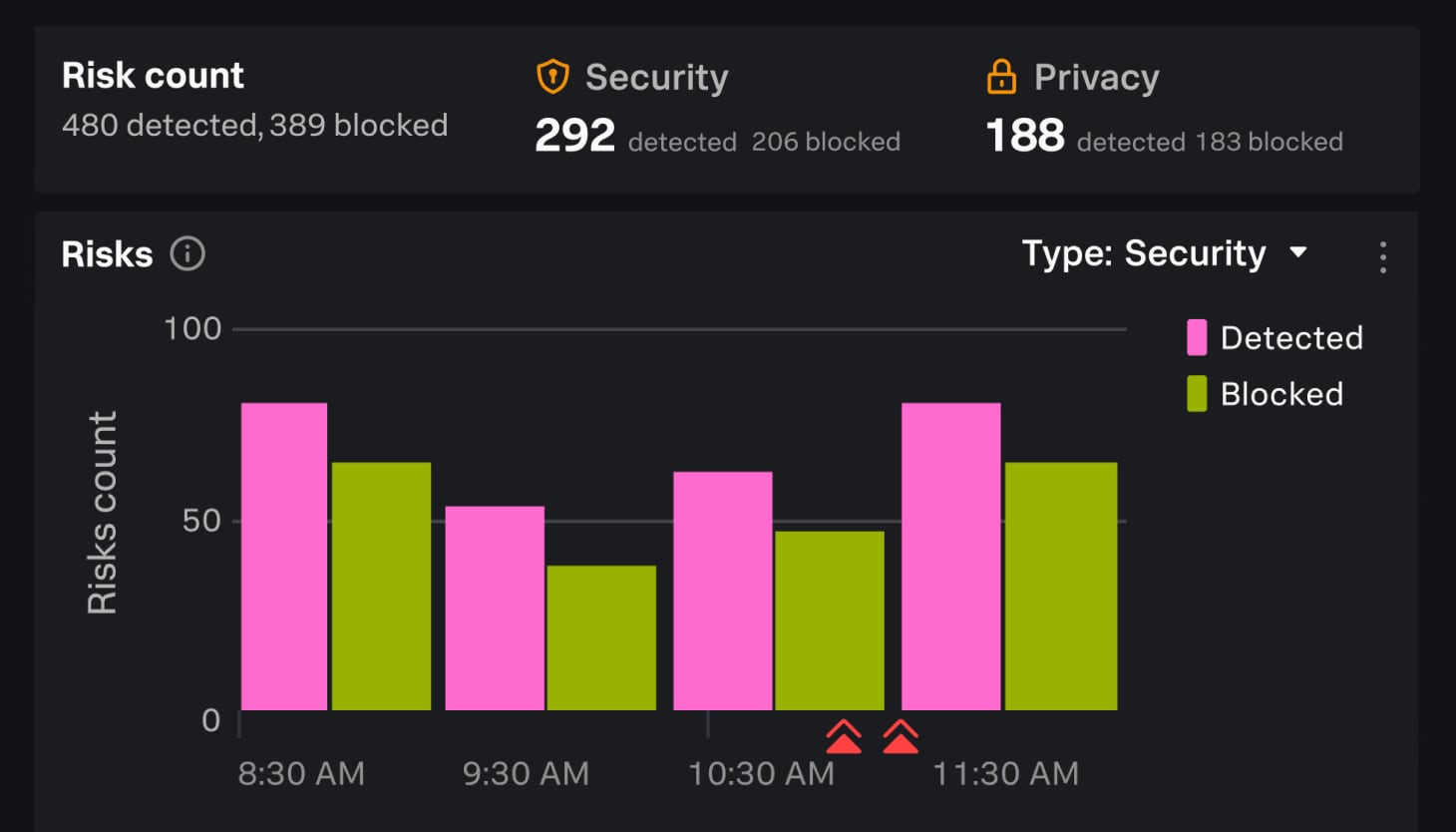
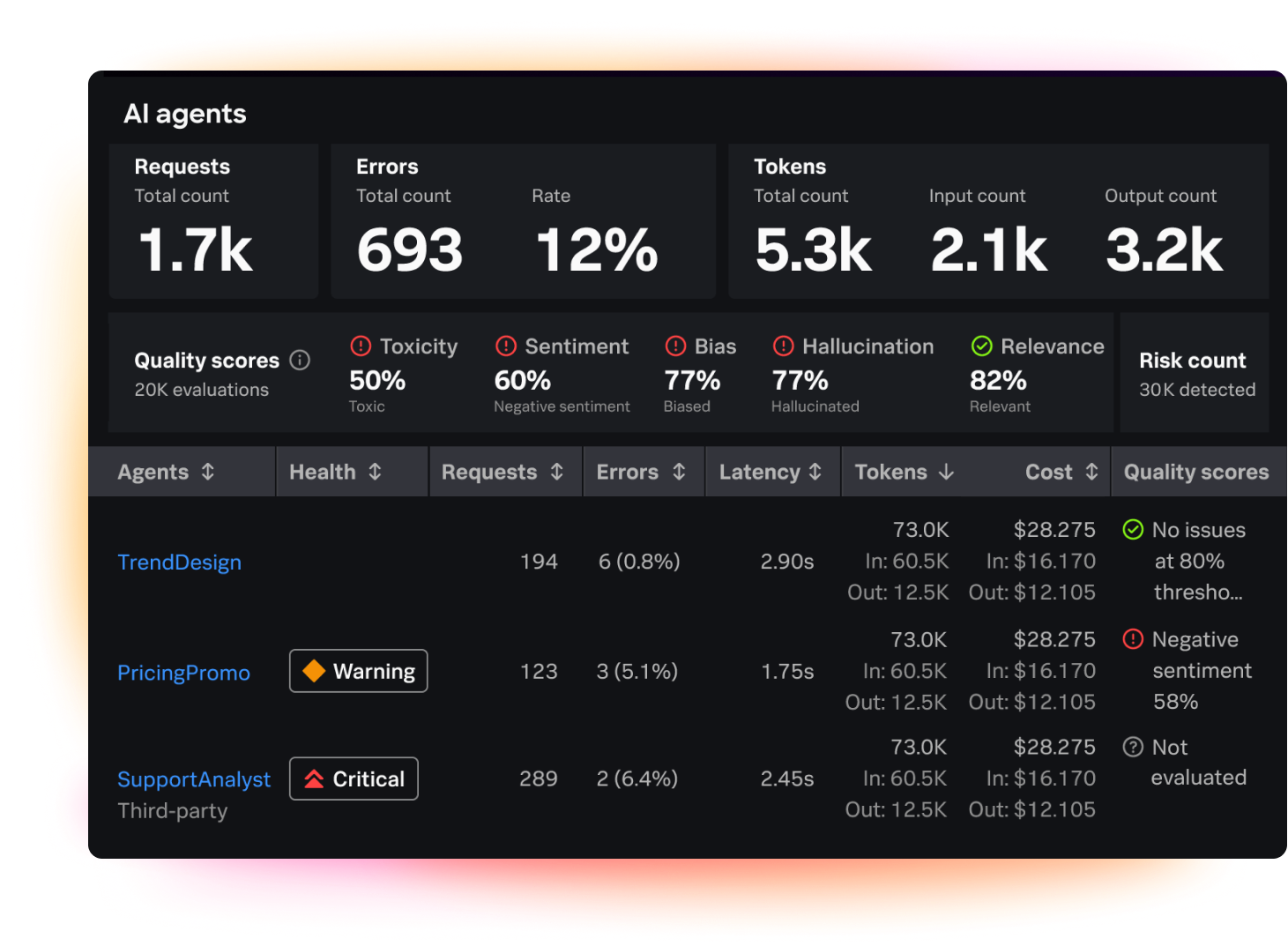
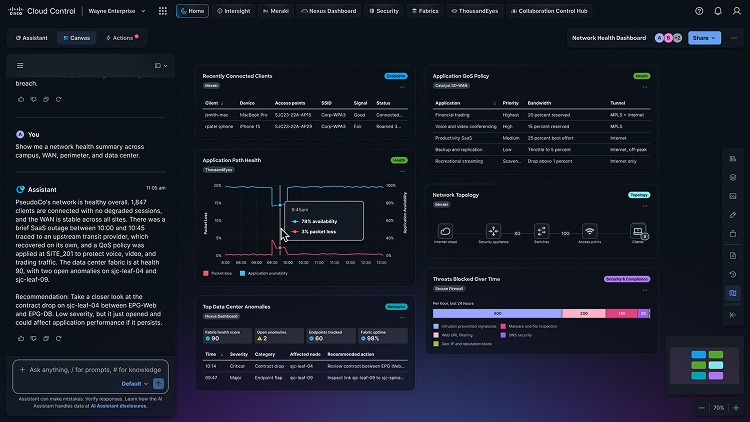
Government 3.0 anticipates agents helping operate the estate with observable, accountable actions. Cloud Control manages supported Cisco infrastructure only. AI Canvas, AI Assistant, and Studio are candidate capabilities to evaluate. Potential integration with Alberta systems is an architecture hypothesis, not an established integration surface or orchestrator. Alberta's application garage, SDLC, content engine, and orchestration remain Alberta's. Availability, licensing, release status, regional availability, required subscriptions and configuration, and Studio pricing must be confirmed with Cisco before procurement scope.
Optional web evidence follows. It is not required for the presentation or working session.
Cloud Control may provide an operational view of supported Cisco infrastructure. Whether its supported inventory, topology, policy, assistant functions, AI Canvas, or Studio can participate in Alberta workflows must be tested. It is not Alberta's integration surface or orchestrator. Studio pricing and status must be confirmed.
On the partnership itself, paper 12 commits Alberta to inviting strong companies to test tools against government workloads through the Sovereign Compute process and forthcoming requests for proposals. Cisco's position: the proof-of-value components ride whichever vehicle the Ministry prefers, the R&D relationship with Amii and the University of Alberta continues on its own track, and anything Cisco cannot cover gets named in the room so the Ministry can source it elsewhere. The scorecard below has open cells on purpose.
| Track | What it covers | Cadence |
|---|---|---|
| PoV | The Decision 2 scope, run against a live workstream | Four-week checkpoints |
| Sizing | The Decision 1 landing zone, priced as configurations per approach | One workshop, then a written design |
| Telemetry | The Decision 3 attach point, built with the Nexus team | Integration sessions as needed |
| R&D | Amii, U of A, and Cisco joint work, including RL on Cisco hardware | Quarterly, own governance |
| Community | What Alberta publishes, Cisco engineers respond to in the open, MCP Scanner and AGNTCY included | Continuous |
The Velocity papers earn their claims with receipts: 600 applications in three months, five months to four days, 185 into 16. The same standard applies in reverse. These figures are from Cisco IT running this stack on Cisco, published as case studies, before any of it was proposed to a customer.
Source: Cisco on Cisco case studies, AI-Ready Data Center series. The 1,000+ GPU week and cost-per-token services figures in Domain A come from Cisco internal technical documentation. The employee-agent rollout is reported by Entrepreneur; the AI-built-software prediction by SDxCentral.
Every requirement from the register and its candidate response appears below. Product entries are capabilities to evaluate. Availability, licensing, release status, regional availability, and required subscriptions and configuration must be confirmed with Cisco before procurement scope. Open-source entries still require technical and legal validation.
| ID | Requirement (short) | Answered by | Status |
|---|---|---|---|
| R1 | Controlled compute | AI POD architecture hypothesis · confidential computing · Intersight | evaluatesizing, availability, licensing, and configuration to confirm |
| R2 | Token throughput | Workload POD design and staged scale-out | evaluatesizing is Decision 1; estimates are not commitments |
| R3 | OpenShift on Ministry hardware | Secure AI Factory with Red Hat candidate configuration | evaluatesupport matrix, licensing, release, and regional status to confirm |
| R4 | Supply-chain audit | Skill Scanner · MCP Scanner · A2A Scanner · AI BOM | open sourcetake now |
| R5 | Beyond 95–98% | AI Defense tests against 200+ attack techniques and threat categories; configured runtime guardrails | evaluaterates, latency, packaging, flows, suitability, and status to validate |
| R6 | Claw governance | DefenseClaw, documented for OpenClaw | open sourceapplicability to Hermes or other runtimes requires separate validation |
| R7 | Hours-to-weaponized | HMF and Live Protect as candidate compensating controls while remediation is pending | evaluatecoverage, enforcement, CVEs, platforms, releases, latency, and residual exposure |
| R8 | Agentic identity | Duo Agentic Identity candidate for discovery, ownership, authorization, lifecycle, and audit | evaluateintegration, orderability, licensing, region, subscriptions, and configuration |
| R9 | System-level observability | Splunk traces, evaluations, token, cost, and performance where instrumented | evaluatecorrelation, automation, evaluator ingestion, and containment integration |
| R10 | Supported Cisco infrastructure operations | Cloud Control · AI Canvas · Cloud Control Studio | evaluatearchitecture hypothesis only; availability, licensing, release, region, subscriptions, configuration, and Studio pricing to confirm |
| R11 | Partner model | PoV under the Sovereign Compute process · Amii and U of A R&D track | sessionvehicle is Decision 4 |
What the scorecard does not cover, said plainly: Alberta's own platforms (Nexus, Bifrost, Ent Tools, the harness) stay Alberta's, and nothing here asks to replace them. Data platform choices, the Gemini and Bedrock relationships, and the sovereign-compute consortium question sit with other partners, and the mapping works alongside all of them. Paper 05 sets a rule for everything the Factory builds: no licence the government cannot exit. Held to the same rule, this stack exits cleanly. The scanners are open source, the telemetry is OpenTelemetry, the guardrails sit at the gateway instead of inside application code, and Bifrost keeps the model layer portable, so leaving is a migration rather than a rewrite.
This document raises four decisions that need Alberta's data in the room. The session closes them in one morning and establishes a pathway others can follow: select a bounded application family, define success criteria, provision the environment, connect Alberta's harness, run recursive loops at increasing concurrency, and measure quality, repeatability, latency, cost, evaluator efficacy, operator burden, and scale-out. Each block ends when its decision is written into the log.
| Time | Item | Closes with |
|---|---|---|
| 08:30 | Arrivals; frame at 08:45: the register and the four decisions | Agreement on scope |
| 09:00 | Domain A: siting and sizing the first sovereign POD | Decision 1 · landing zone & sizing |
| 10:00 | Domains B and C: the agent-security proof of value, scanners and identity included | Decision 2 · PoV scope & pass condition |
| 11:00 | Break | |
| 11:15 | Domain D: where telemetry attaches to Nexus, and the morning view | Decision 3 · attach point |
| 12:00 | Domain E: vehicle, sponsors, and three dates | Decision 4 · vehicle & dates |
| 12:30 | Readback; log circulated before lunch ends | Signed log |
Room rules: twelve people or fewer, one screen, one whiteboard, laptops open only for the scribe and demos. Pricing beyond rough sizing, contract terms, and anything touching citizen data stay out of scope. Attendees read papers 05, 09, 12, and 15 beforehand; this document covers the rest.
The scribe fills this table during the session. The download button produces the log as a Markdown file, which goes to every attendee before lunch ends.
| # | Decision | What was decided | Owner (GoA) | Owner (Cisco) | Date |
|---|---|---|---|---|---|
| 1 | Landing zone & sizing | ||||
| 2 | Agent security PoV scope | ||||
| 3 | Telemetry attach point | ||||
| 4 | Vehicle & dates | ||||
| + | Parked items |
Attendees read four papers and one response before the session. The papers take about an hour in total, and the narration on the Velocity site covers the same ground for anyone who prefers to listen. Cisco attendees read all five. Alberta attendees likely wrote the first four.
| # | Reading | Why it matters for the morning |
|---|---|---|
| 05 | The Four Approaches to AI Modernization | The frame for every block, and the source of the demand curve in figure 3 |
| 09 | The AI Factory: Orchestration and Observation (Nexus) | The platform every decision touches, including the claw roadmap |
| 12 | The Agentic Technology Stack | Names the open gaps this session closes, and the token ceilings behind Block 1 |
| 15 | The Compression Problem | The argument for system-level oversight that Block 3 turns into a design |
| ; | This document, top to bottom | The register (§01), the canvas (§03), and the scorecard (§11) at minimum |
| Side | Seats |
|---|---|
| GoA | DM Technology and Innovation; ADM technology; CIO; Nexus platform lead; security lead; one Builder from the Level 3 cohort, because the people using the tools should hear the infrastructure argued |
| Cisco | Executive advisor for AI, Canada; account lead; solution architect; AI Defense technical lead; Splunk architect; compute architect (remote is fine for the last two) |
| Rules | Twelve people or fewer. Phones down during blocks. Laptops open only for the scribe and the demos. Anything off-scope goes to the parked row of the log. |
Pricing beyond rough sizing, contract terms, and anything touching citizen data. The morning decides architecture and next steps. Paper 16 argues the right measure of an AI program is capability built, and the session holds itself to the same standard: four decisions on the wall by lunch.